How Long Do Water Heaters Last? 7 Signs It May Be Time to Replace Yours
Joe the Plumber • September 9, 2026
Your water heater is one of those household appliances you probably don't think about much—until the shower suddenly turns cold.
If your water heater is getting older, making strange noises, leaking, or simply not keeping up with your household anymore, you may be wondering whether it can be repaired or if it's time to replace it. So, how long does a water heater actually last?
There isn't one expiration date that applies to every unit. The lifespan of a water heater depends on the type of system, water quality, maintenance, household usage, and the condition of the equipment. Instead of relying on age alone, it helps to know the warning signs that your water heater may be nearing the end of its useful life.
Here are seven things Lancaster County homeowners should watch for.
1. Your Water Heater Is Getting Older
Age is a good place to start, but it shouldn't be the only factor in deciding whether to replace a water heater. Traditional tank-style water heaters commonly provide many years of service, but their condition can vary significantly depending on maintenance, usage, and the water running through them.
If your water heater is older and beginning to require repairs, it may make more sense to start discussing replacement rather than continuing to invest in an aging unit. Not sure how old yours is? The manufacturer's label and serial number can often help identify when the unit was made.
2. You're Running Out of Hot Water Faster Than You Used To
Maybe your water heater still works—it just doesn't work as well as it once did. If showers are getting cold sooner, you're struggling to get through normal household routines, or the water never seems to get as hot as it used to, your water heater may need attention.
The cause isn't always the same. A heating component may need repair, sediment may be affecting performance, or the unit may simply no longer be meeting your household's hot-water needs.
Before replacing it, have the problem properly diagnosed. A repair may be all that's needed. But if the water heater is older and performance has been steadily declining, replacement may provide a better long-term solution.

3. You Notice Water Around the Tank
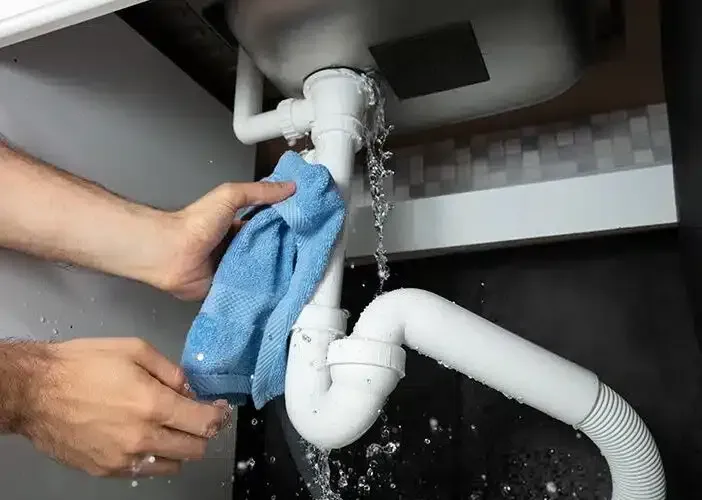
Water around your water heater deserves attention. In some cases, moisture may be related to a connection, valve, or another repairable issue. In others, water can indicate deterioration or damage to the tank itself.
A leaking tank is very different from a small plumbing connection that needs repair, so don't assume you know the source based solely on where you see the water.
If you notice water collecting around the base of your water heater, have it evaluated promptly—especially if the leak appears to be getting worse.
If you're dealing with significant active leaking or water damage, don't wait to address it. Get help fast and call today: 717-581-7407
4. Your Water Heater Is Making Strange Noises
Water heaters aren't completely silent, but new or unusually loud noises can be a sign that something has changed. Popping, rumbling, banging, or crackling sounds may be associated with sediment or mineral accumulation inside a tank-style water heater.
As water is heated, minerals naturally present in the water can settle inside the tank over time. The amount of buildup can depend in part on the home's water quality.
This is one reason water quality and water-heater performance aren't completely separate issues. Lancaster County homeowners who experience hard water may also notice mineral buildup elsewhere in the home, including white scale around faucets and fixtures.
5. Your Hot Water Looks Rusty or Discolored
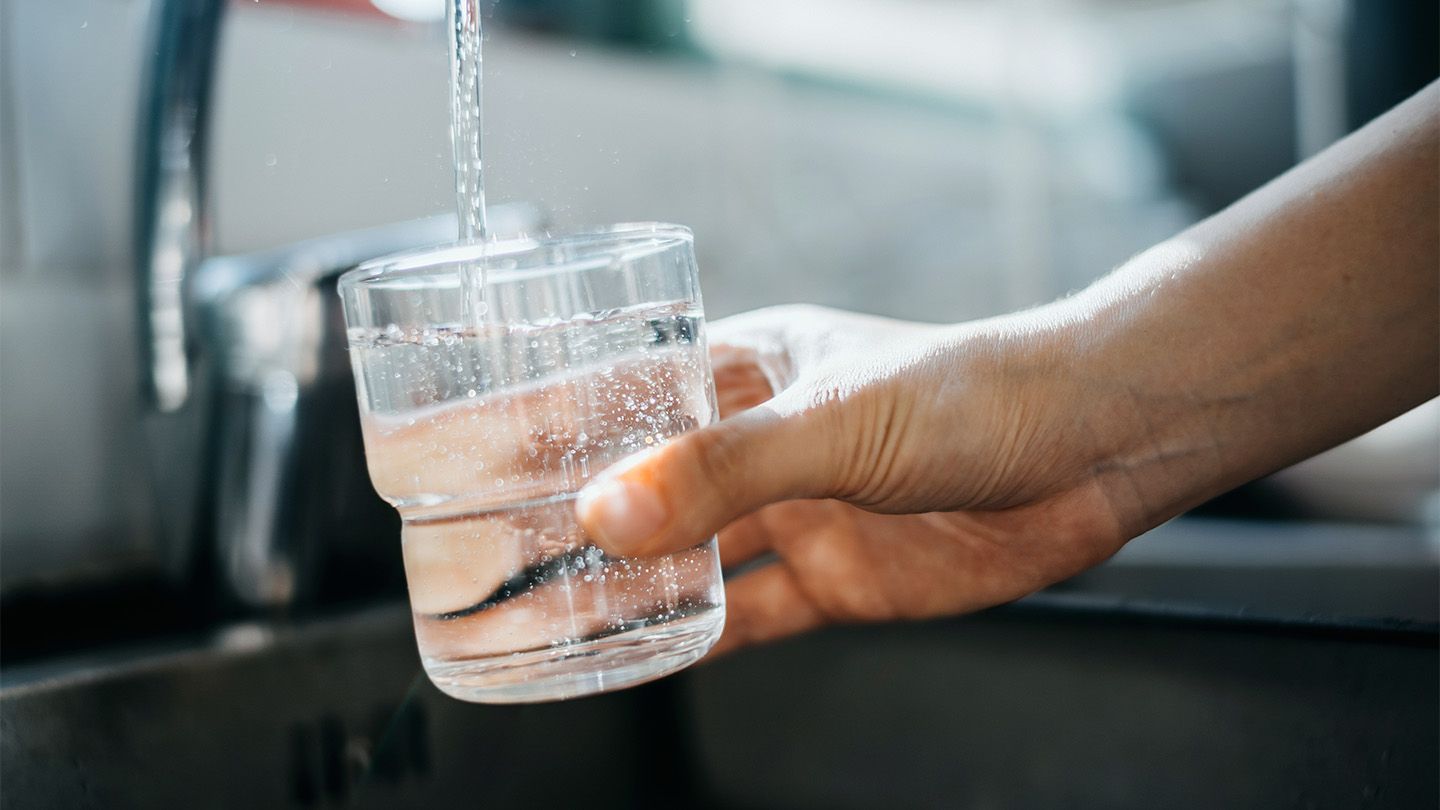
If the hot water coming from your faucets suddenly looks rusty, cloudy, or otherwise different, don't immediately assume the water heater needs replacement—but don't ignore it either.
First determine whether the discoloration is happening with only the hot water or both hot and cold water. If the problem only appears when using hot water, the water heater may be involved. If both hot and cold water are affected, there may be another water-quality or plumbing issue to investigate.
Changes in water color, taste, or odor are worth evaluating so you can determine the actual source before deciding on a solution.
6. You're Calling for Water Heater Repairs More Often
One repair doesn't necessarily mean it's time for a new water heater. But if an older unit has started requiring one repair after another, it's reasonable to ask whether continuing to repair it makes financial sense.
Think about the bigger picture: How old is the unit? What is wrong with it now? Have you recently paid for another repair? Is it still meeting your household's needs? What condition is the rest of the water heater in?
Sometimes a straightforward repair is absolutely worthwhile. Other times, putting additional money into an aging system simply postpones a replacement that is likely coming soon anyway. A plumber can help you compare the repair you're facing now with the cost and potential benefits of replacing the unit.
7. Your Water Heater No Longer Fits Your Household's Needs
Sometimes the problem isn't that a water heater has failed. Your household may have simply outgrown it.
Changes in the number of people living in the home, daily routines, appliances, bathrooms, or overall hot-water usage can affect whether your existing water heater can comfortably keep up. If you're replacing an older unit, it's a good opportunity to evaluate your current hot-water needs rather than automatically installing the exact same type or size of equipment.
The goal isn't simply to buy a new water heater. It's to choose a system that makes sense for your home, household, and typical usage.
Should You Repair or Replace Your Water Heater?
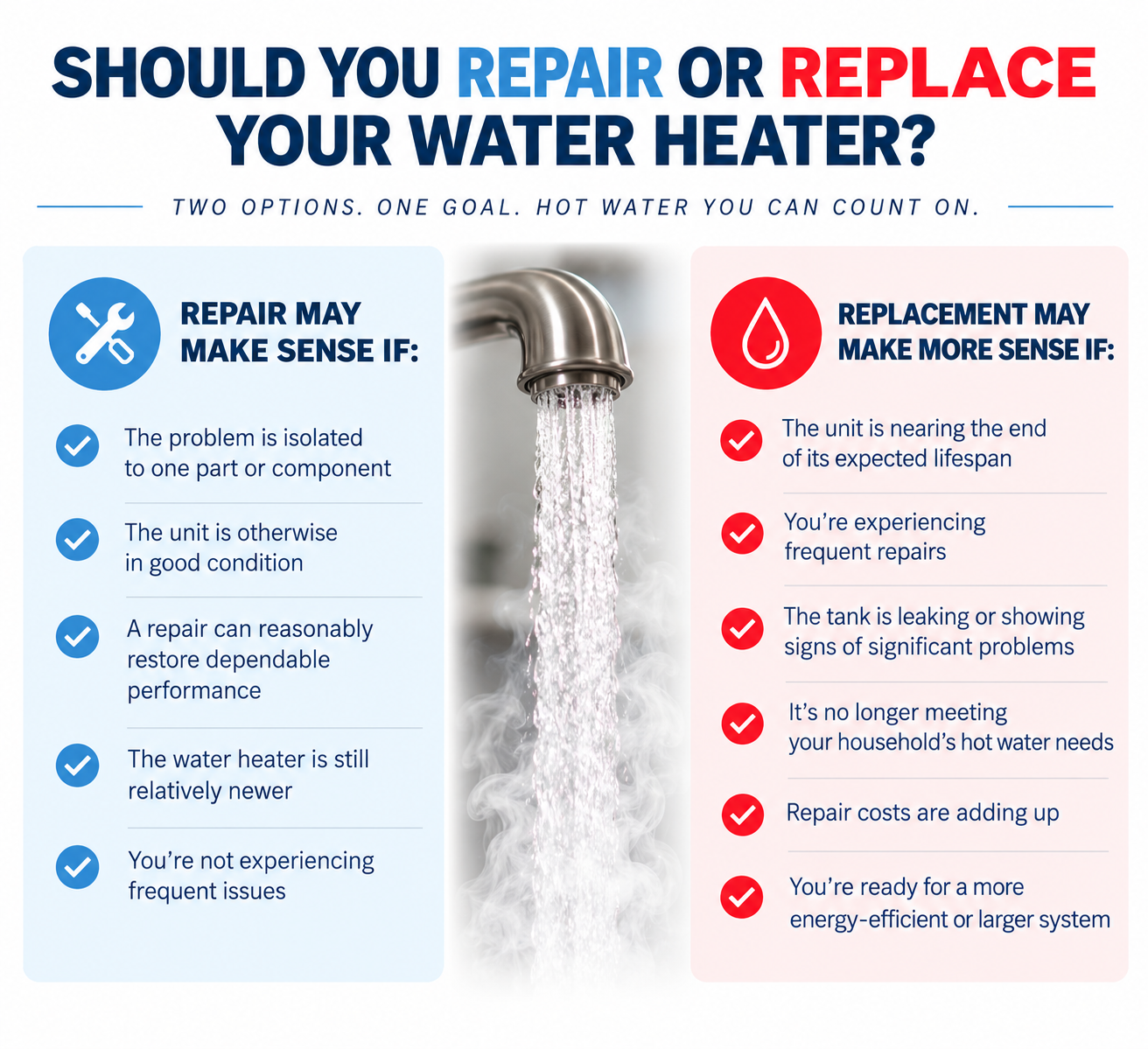
This is usually the real question. And there's no universal answer based on one symptom or one particular age. A water heater repair may make sense when the problem is isolated, the unit is otherwise in good condition, and the repair can reasonably restore dependable performance.
Replacement may make more sense when the water heater is aging, experiencing significant problems, leaking from the tank, no longer meeting your household's needs, or requiring increasingly frequent repairs. That's why Joe the Plumber doesn't believe homeowners should have to diagnose their own water heaters from a checklist online. The better approach is to identify what's wrong, consider the condition of the unit as a whole, and determine which option makes the most sense.
Can Hard Water Affect a Water Heater?
It can certainly play a role in mineral accumulation. Hard water contains higher concentrations of minerals such as calcium and magnesium. As water is heated, mineral deposits can accumulate inside plumbing fixtures and equipment over time.
For homeowners who are noticing scale around faucets, spots on dishes, mineral deposits, or other hard-water symptoms, it may be worth looking at the home's overall water quality rather than treating each symptom separately. Joe the Plumber provides water testing and water treatment solutions, including water softeners and filtration systems, for Lancaster County homes.
What Should You Consider When Buying a New Water Heater?
If replacement is the right choice, don't select a new water heater based on price alone. Consider:
- The size of your household
- Typical hot-water usage
- Available space
- Fuel or energy source
- The existing plumbing setup
- Energy efficiency
- Equipment and installation costs
- Your long-term plans for the home
Professional installation matters too. A water heater needs to be properly sized, connected, vented where applicable, and installed according to applicable requirements. Joe can help you compare the available options and choose a system appropriate for your home rather than simply replacing old equipment with whatever happens to be available.
Don't Wait Until You Have No Hot Water
A completely failed water heater has a funny way of becoming an emergency at the least convenient possible time. If your system is aging and you've already started noticing warning signs, having it evaluated before it stops working altogether gives you more time to understand your options and plan for replacement if necessary. That can be especially helpful heading into colder weather, when dependable hot water becomes even harder to live without.
Water Heater Repair & Replacement Services
Joe the Plumber provides professional water heater repair, replacement, and installation throughout Lancaster County, including Lancaster, Manheim Township, Neffsville, Lititz, East Petersburg, Hempfield, Manheim, Ephrata, and surrounding communities.
Since 1999, Joe and his team have helped local homeowners solve plumbing problems with straightforward recommendations and dependable workmanship.
If your water heater isn't keeping up, is making unusual noises, has started leaking, or simply has you wondering how much life it has left, give Joe a call. We'll help you determine whether your water heater needs a repair—or whether it's time to start thinking about replacement.
Need help with your water heater in Lancaster County?
Call Joe the Plumber today.